

To become an IPTV reseller in 2026, start by confirming that the service and content you intend to resell are authorized, register the business required in your jurisdiction, choose a reliable reseller panel, purchase a small credit package, configure your brand and support process, then test the complete customer journey before selling. The panel is only one part of the business. Reliability, clear policies, data protection, renewals, and customer support determine whether the operation lasts.
Key takeaways
- Sell only services and content for which you have clear authorization.
- Start with a small credit package and validate demand before scaling.
- Test line creation, renewal, suspension, device setup, and support end to end.
- Use a private domain, strong authentication, and minimal customer data.
- Track credit cost, support time, refunds, and renewals—not revenue alone.
What does an IPTV reseller actually do?
An IPTV reseller uses a management panel to create and manage customer access to an authorized internet-delivered television or streaming service. The reseller normally buys credits from a provider, then spends those credits when creating or extending customer lines. Depending on the provider and plan, the reseller may also manage connection limits, expiration dates, device details, bouquets, notes, and account status.
The day-to-day work is operational: onboarding customers, explaining compatible apps, renewing accounts, responding to service questions, documenting payments, and escalating provider-side incidents. A good reseller is therefore closer to a small subscription-service operator than a simple salesperson.
What you need before you start
You do not need a large company on day one, but you do need a controlled setup. Prepare the following before accepting a paying customer:
- A documented agreement or clear authorization from the service you resell.
- A domain and professional support email that you control.
- A reseller panel with secure login, line controls, logs, and reliable support.
- A small starting budget for credits, domain costs, taxes, and refunds.
- A payment method permitted for your business and target market.
- Terms of service, privacy information, refund rules, and an escalation path.
- A simple record of customers, renewal dates, costs, and support cases.
If you are testing the workflow, use demo accounts and test devices. Do not collect real customer data until your privacy process and access controls are ready.
Step 1: verify content rights and local requirements
Ask for evidence, not assurances
Before you pay for a panel or credits, ask the supplier what you are authorized to resell, in which territories, and under what conditions. Keep the agreement and any permitted marketing claims. If the answer is vague, do not build your business on it.
Copyright rules differ by country, but protected broadcasts and video normally require permission from the rights holder or an authorized distributor. The U.S. Copyright Office provides general copyright information, while businesses operating elsewhere should consult the relevant national authority or a qualified adviser.
Also decide what customer information is genuinely necessary. If you serve people in the European Economic Area, review the European Commission’s data-protection guidance. Collecting less data, limiting staff access, and setting a deletion schedule reduce risk everywhere.
Step 2: choose a reliable reseller panel
Evaluate the workflow, not the sales page
A polished dashboard is useful, but daily reliability matters more. Request a controlled demo and test the operations you will repeat: create a line, edit it, renew it, suspend it, search for it, and review the history.
| Area | What to verify | Why it matters |
|---|---|---|
| Authorization | Written scope, territory, and reseller permission | Reduces legal and account-closure risk |
| Reliability | Status visibility, incident communication, backups | Customers judge you during outages |
| Security | HTTPS, strong passwords, limited roles, login records | Protects credits and customer accounts |
| Operations | Fast search, renewals, notes, filters, audit trail | Saves time as the customer list grows |
| Support | Response channel, hours, escalation and ownership | Prevents unresolved tickets |
Explore the Strong 8K reseller panel overview and the detailed panel security features as examples of the capabilities to compare. Verify every claim against a live demo and your own requirements.

Step 3: select a sensible credit package
Start small and calculate the real unit cost
Credits are working capital. Do not buy a large package only because the advertised cost per credit is lower. First learn how many credits each duration, connection type, or package consumes and whether unused credits expire.
Create a basic unit-economics sheet with credit cost, payment fees, taxes, refund reserve, support time, and acquisition cost. The result is your approximate cost per active customer. Add a safety margin for replacements or service recovery before setting a retail price.
Compare the published reseller panel pricing with the credit system explanation, then confirm the exact consumption rules inside your account before committing more capital.
Step 4: set up your brand and private domain
Separate your customer-facing identity from the supplier
Use a domain you own, a branded email address, and consistent support details. A private panel domain can make login URLs easier to recognize and gives you more control if your infrastructure changes later.
Configure DNS carefully, enforce HTTPS, and avoid exposing unnecessary server details. Follow the private domain setup guide, then test the login URL on mobile data and a second network. Keep DNS records documented so changes are reversible.
Your website should explain what you sell, where it is available, who provides support, and what the refund and acceptable-use rules are. Avoid promises such as “zero downtime” or “every channel” unless you can prove and contractually support them.
Step 5: create and manage customer lines
Build one repeatable onboarding checklist
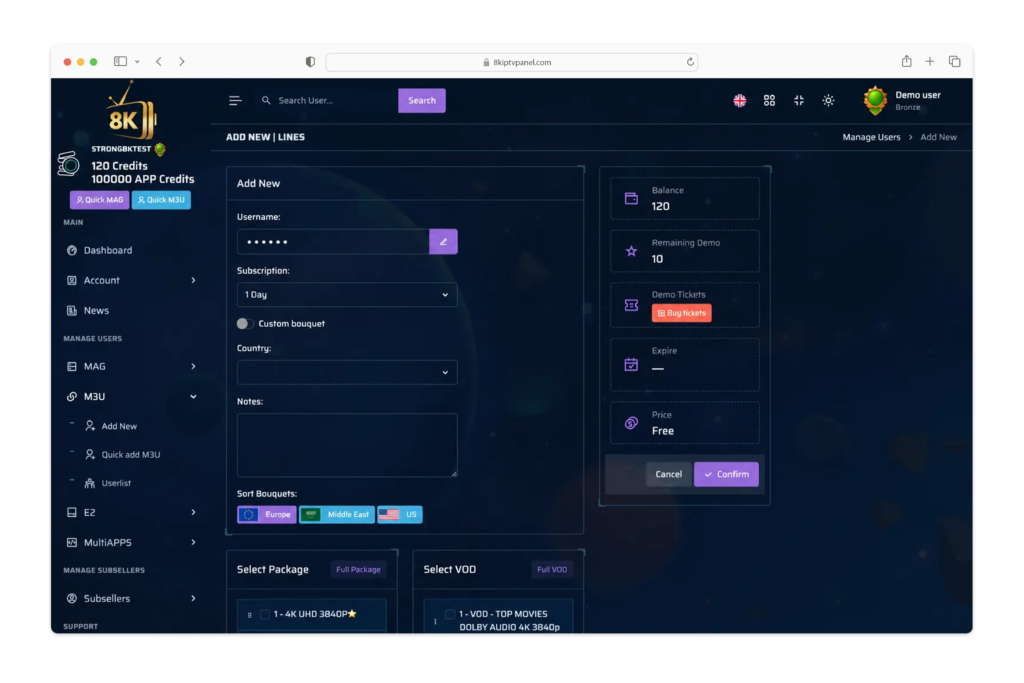
For every order, verify the plan, duration, connection limit, start date, customer contact, and authorization before creating access. Record only the information you need and never send credentials in a public channel.
- Confirm the customer’s plan and permitted use.
- Create the line with the correct duration and connection limit.
- Record the expiration date and the credits consumed.
- Send setup instructions through a private, agreed channel.
- Ask the customer to test playback, audio, and device compatibility.
- Schedule a renewal reminder before the expiration date.
The customer management guide shows the core organization workflow. Use clear internal notes and unique customer references; avoid placing sensitive information in free-text fields.
Step 6: create a support and renewal system
Separate device issues from service issues
Support becomes expensive when every problem is treated as the same problem. Ask a short sequence: Is the account active? Does another device work? Does another network work? Is the app current? Is the issue one item or the entire service?
Document common answers and define when to escalate. Never ask customers to share payment passwords, complete device backups, or unrelated personal data. For recurring technical issues, use the panel troubleshooting guide as a starting checklist.
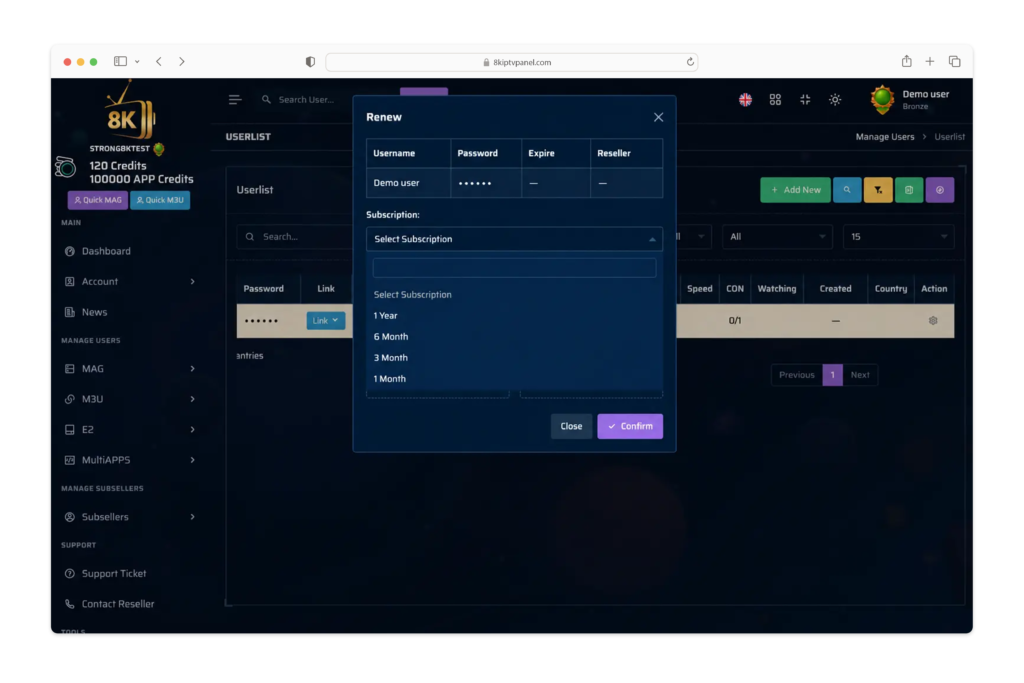
For renewals, notify customers before expiry, confirm the requested term, receive an authorized payment, renew once, and send confirmation. Audit the credit balance daily during busy periods to catch duplicate or incorrect actions quickly.
Step 7: launch with a controlled pilot
Test with a small group before scaling
A pilot exposes onboarding gaps without putting a large customer base at risk. Use a few authorized test customers, different supported devices, and at least two networks. Track setup time, ticket categories, refund requests, and renewal behavior.
Only increase your credit inventory or advertising after the service, documentation, and escalation path work reliably. If you need general help structuring a small business, the U.S. Small Business Administration business guide offers a useful planning framework; use the equivalent official resource in your country.
Common mistakes new IPTV resellers should avoid
- Ignoring licensing: a low wholesale price is not evidence of content rights.
- Buying too many credits: unused inventory can lock up cash or become worthless if terms change.
- Using one password everywhere: a compromised inbox can lead to a compromised panel.
- Promising perfect uptime: networks, apps, devices, and upstream systems can all fail.
- No refund policy: unclear rules create disputes and inconsistent decisions.
- Collecting excessive data: more data creates more responsibility and breach impact.
- Scaling before documenting support: repeated questions quickly consume the margin.
- Depending on one channel: keep a backup method for urgent customer communication.
Frequently asked questions
How much money do I need to become an IPTV reseller?
The starting amount depends on the provider’s minimum credit package, domain costs, business requirements, payment fees, and your refund reserve. Start with the smallest package that supports a controlled pilot, then scale from real demand.
Do I need technical experience?
You do not need to be a developer, but you should be comfortable with dashboards, device setup, DNS basics, account security, and structured troubleshooting. Test every customer workflow yourself before selling it.
Is becoming an IPTV reseller legal?
Reselling authorized streaming services can be lawful, but legality depends on content rights, the agreement, territories, marketing, consumer rules, taxes, and local law. A panel alone does not prove authorization. Obtain written clarity and professional advice where needed.
What is an IPTV reseller panel?
It is an administrative dashboard used to spend credits, create or renew customer access, manage expiration dates, review status, and organize accounts. Features and permissions vary by provider.
How do I choose the right reseller panel?
Verify authorization, security, reliability, support ownership, credit rules, audit history, and the complete line-management workflow. Use a demo and test real operational tasks instead of choosing from price alone.
Ready to test a professional reseller workflow?
Review the Strong 8K panel, compare the credit options, and ask questions about the workflow before making a larger commitment.
Contact Strong 8K